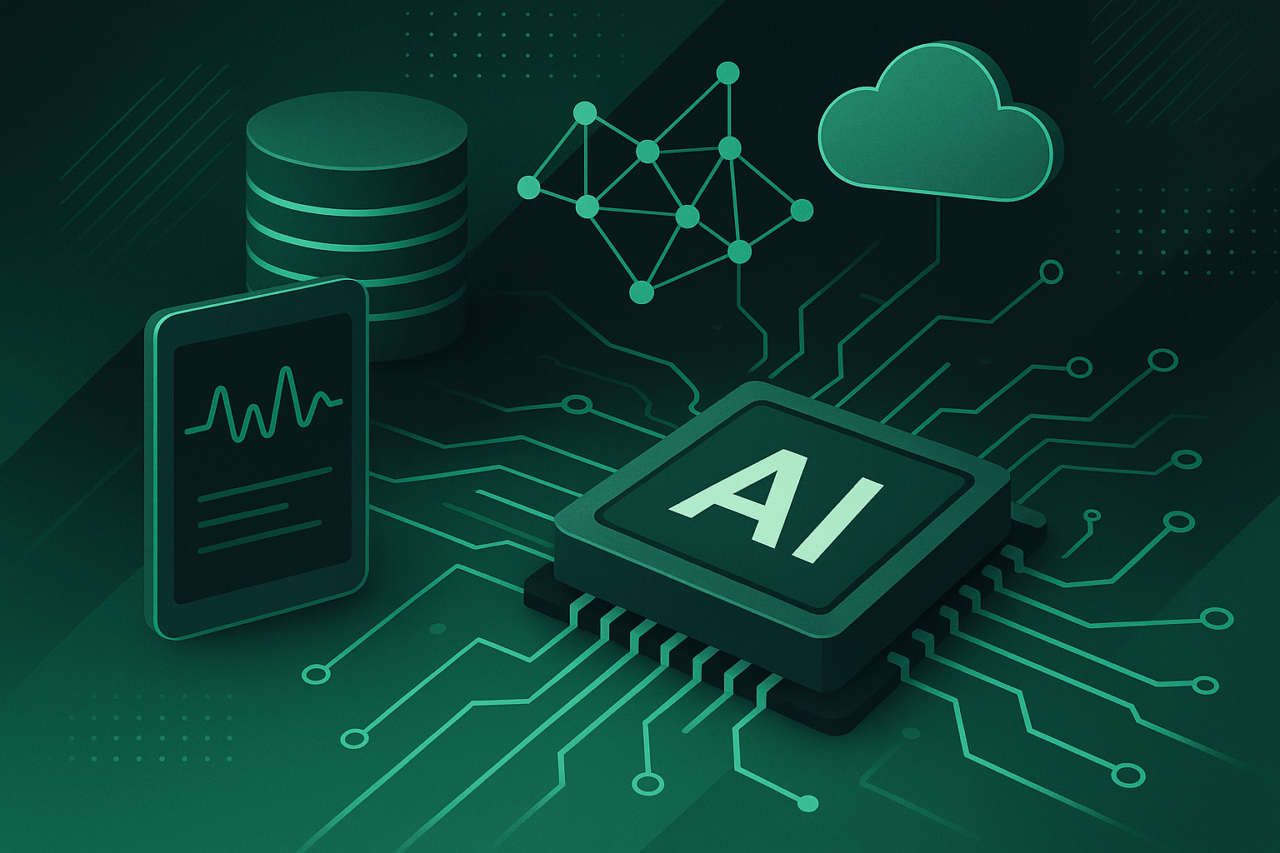
Defining Edge AI: Intelligence at the Periphery
The allure of Edge AI lies in its strategic rebellion against the centralized cloud. Rather than shuttling data across continents to distant servers, Edge AI plants intelligence directly where the data originates—be it traffic cameras, manufacturing sensors, or a humble refrigerator monitoring its own contents. In this way, it echoes the early days of computing, when mainframes gave way to personal computers, shifting power outward from the center.
Key Components and Architecture
- Edge Devices: Hardware capable of running AI workloads locally—think Raspberry Pi, NVIDIA Jetson, smartphones, or industrial controllers.
- Edge AI Models: Optimized neural networks, often pruned or quantized, designed for efficient inference on constrained devices.
- Connectivity Layer: Local networks or intermittent cloud links, used as needed for updates or aggregated analysis.
- Orchestration: Tools for deploying, updating, and monitoring AI models at scale across a fleet of devices.
Table 1: Edge AI vs. Cloud AI
| Aspect | Edge AI | Cloud AI |
|---|---|---|
| Latency | Low (milliseconds) | Higher (network round-trip) |
| Bandwidth | Minimal (local data processing) | High (data sent to cloud) |
| Privacy | Strong (data stays local) | Weaker (data leaves premises) |
| Scalability | Device-limited | Virtually unlimited |
| Model Size | Small/optimized | Large/complex |
| Maintenance | Distributed, complex | Centralized, easier |
Optimizing Models for the Edge
Deploying a 100-million-parameter transformer to a microcontroller is as futile as trying to fit a steam engine in a pocket watch. The secret: model optimization. Techniques include:
- Quantization: Reducing floating-point weights to int8 or even lower precision.
- Pruning: Removing redundant neurons and connections.
- Knowledge Distillation: Training a small “student” model to mimic a larger “teacher” model.
Example: Quantizing a TensorFlow Model for the Edge
import tensorflow as tf

# Load pre-trained model
model = tf.keras.models.load_model('my_model.h5')

# Convert to TensorFlow Lite with quantization
converter = tf.lite.TFLiteConverter.from_keras_model(model)
converter.optimizations = [tf.lite.Optimize.DEFAULT]
tflite_quant_model = converter.convert()

# Save the quantized model
with open('model_quant.tflite', 'wb') as f:
    f.write(tflite_quant_model)
Deployment Patterns: On-Device, On-Gateway, and Hybrid
- On-Device Inference: All computation happens on the sensor or device. Used for ultra-low-latency tasks (e.g., obstacle detection in drones).
- On-Gateway Inference: A local gateway aggregates data from several devices and performs inference—striking a balance between computational resources and response time.
- Hybrid Edge-Cloud: Some preprocessing or “first-pass” inferences occur at the edge, with complex cases escalated to the cloud. This is reminiscent of triage in field hospitals: treat what you can on-site, escalate the rest.
Table 2: Practical Examples of Edge AI Applications
| Industry | Edge AI Use Case | Edge Device Example |
|---|---|---|
| Manufacturing | Anomaly detection in assembly | NVIDIA Jetson Nano |
| Retail | Smart shelf inventory | ARM Cortex-M processors |
| Healthcare | Portable diagnostic imaging | Custom FPGA boards |
| Agriculture | Pest detection via imaging | Raspberry Pi with camera |
| Smart Cities | Traffic flow optimization | Edge TPUs in cameras |
Managing and Updating Edge AI Models
With great decentralization comes great responsibility. Updating models on thousands of devices recalls the challenge of keeping a fleet of ships in formation. Automation is key:
- Model Versioning: Tag models with semantic versions.
- Continuous Integration/Continuous Deployment (CI/CD): Use pipelines to test and deploy new models.
- Over-the-Air (OTA) Updates: Automatically push new models to edge devices as conditions permit.
Sample: Rolling Out a Model with Azure IoT Edge
# Deploy a new module with an updated AI model
az iot edge deployment create    --deployment-id myEdgeDeployment    --hub-name myIoTHub    --content deployment.json    --target-condition "deviceId='edgeDevice01'"
Security Considerations
If the past teaches us anything, it’s that distributed systems are only as strong as their weakest outpost. Edge AI must contend with:
- Physical Tampering: Devices may be accessible to adversaries.
- Data Integrity: Local inference means local attack surfaces.
- Secure Boot and Encrypted Models: Safeguard models and data in transit and at rest.
Edge AI Frameworks: A Comparative Glance
| Framework | Supported Hardware | Features | Typical Use Case |
|---|---|---|---|
| TensorFlow Lite | ARM, x86, Edge TPU | Quantization, model conversion | Mobile, IoT |
| ONNX Runtime | x86, ARM, GPUs | Cross-platform, extensible | Cross-vendor compatibility |
| NVIDIA Jetson Inference | Jetson platforms | CUDA/cuDNN acceleration | Robotics, Vision |
| OpenVINO | Intel CPUs, VPUs, FPGAs | Model optimization, deployment | Industrial, Vision |
Putting Edge AI to Work: A Step-By-Step Example
Suppose you want to deploy a wake-word detector (think “Hey, Alexa”) to a microcontroller:
- Train a small convolutional neural network (CNN) using audio samples.
- Optimize the model using TensorFlow Lite for Microcontrollers.
- Convert the model to a C array.
# Convert .tflite model to C array for microcontroller
import xxd
!xxd -i model_quant.tflite > model_data.cc
- Embed the model in your firmware and run inference on audio frames, triggering an event on detection.
The Quiet Power of Local Intelligence
Edge AI, much like a seasoned craftsman working at the source of raw material, eschews unnecessary transportation and delay. It enables devices not just to sense, but to decide. In a world increasingly defined by immediacy and autonomy, computing at the source isn’t just smarter—it’s inevitable.

Comments (0)
There are no comments here yet, you can be the first!